About Sinai Religious School
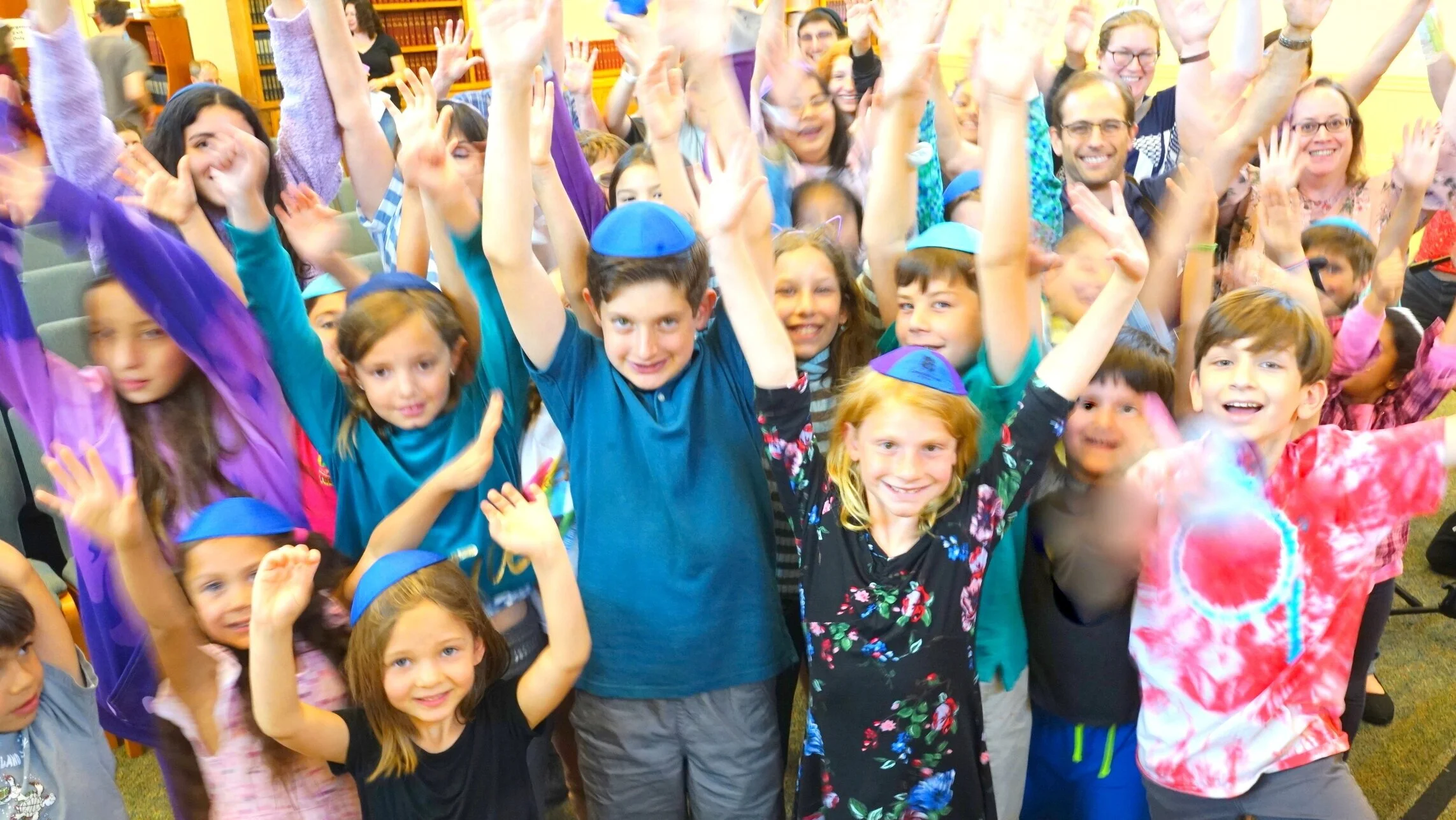
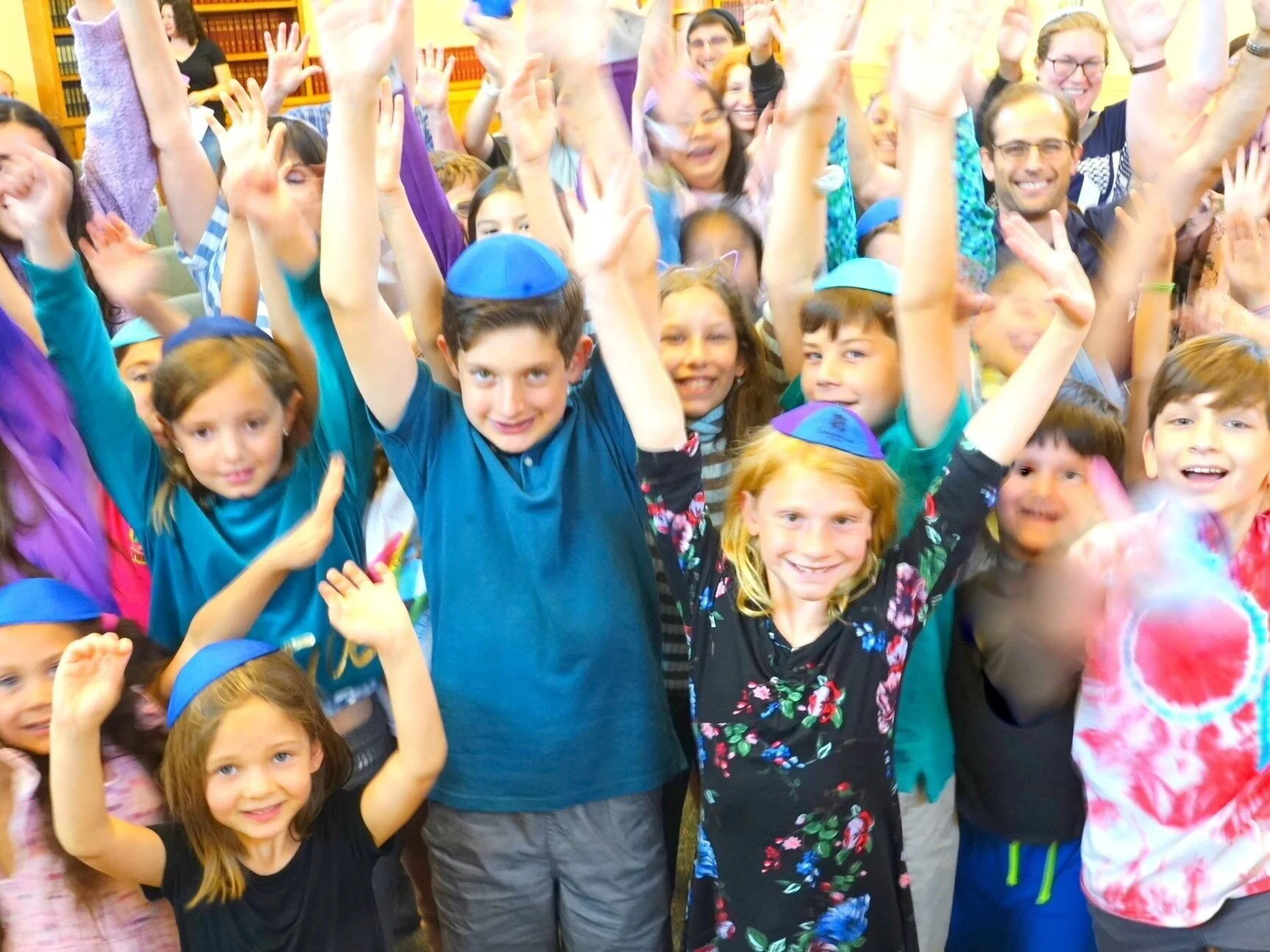
Congregation Sinai’s Religious School offers your family a warm, nurturing environment where your child can thrive and grow.
We strive to give children and families the tools and experiences that will help them to live a Jewish life. We endeavor to impart a love for Judaism and for Eretz Yisrael, engagement with God, and a commitment to mitzvot (commandments/good deeds), gemilut chasadim (acts of loving-kindness), and tikkun olam (making the world a better place). Students learn Hebrew reading skills in an individualized setting to meet their needs.
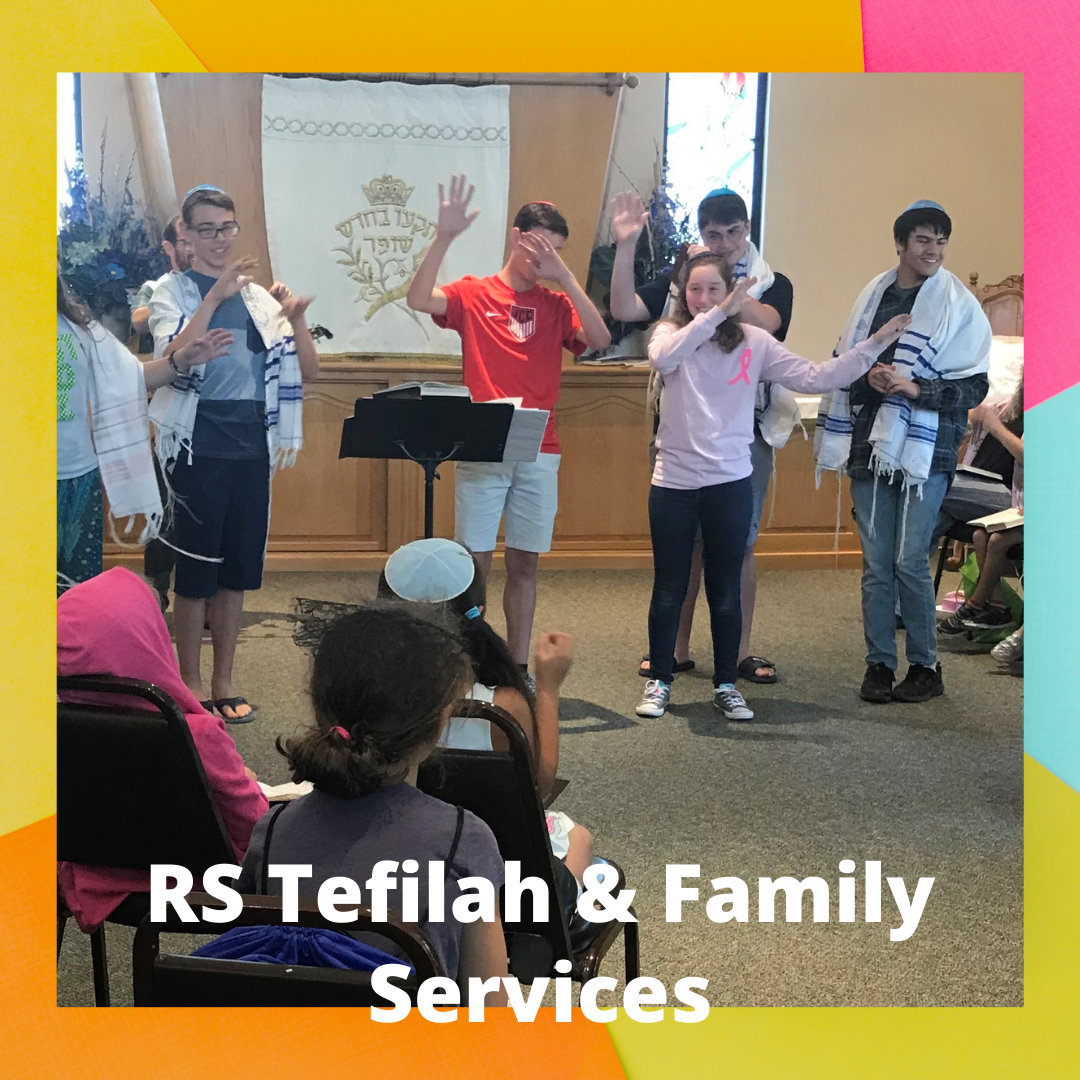
Once-a-month our Family Learners' service gives students the opportunity to put their learning into real-time practice while celebrating Shabbat with their friends and the entire Sinai community. Specific dates can be found on our religious school schedule of days.
Mission & Goals
RELIGIOUS SCHOOL MISSION STATEMENT
Congregation Sinai Religious School partners with the Sinai community to create an environment that is conducive to learning and understanding Judaism within the framework of the Conservative Movement.
We strive to give children and families the tools and experiences that will help them to live a Jewish life. We endeavor to impart a love for Judaism and for Eretz Yisrael, engagement with God, and a commitment to mitzvot and tikkun olam.
RELIGIOUS SCHOOL GOALS
Yehadut: Love of Being Jewish - To develop an appreciation of Judaism and a sense of pride in being Jewish by providing a positive, experiential atmosphere for learning prayers, history, and holidays using art forms, music, cooking, and other projects.
Mitzvot: Living a Jewish Life - To engage with God, Torah, and mitzvot within the framework of the Conservative Movement and to incorporate them into our lives in a meaningful way.
Tikkun Olam: Repairing the World - To develop of sense of Jewish responsibility towards all people throughout the world through tzedakah (charity) and gemilut chasadim (acts of loving-kindness).
Klal Yisrael: Israel - Land, People, State - To develop an appreciation and identification with Klal Yisrael and to foster a sense of community with Jews in Israel and around the world.
T’fillah: Prayer - To develop synagogue competence, including understanding the structure and meaning of Jewish prayer and the ability to participate in congregational services.
Ivrit: Hebrew - To develop basic Hebrew reading, writing, and simple translation skills.
SINAI RELIGIOUS SCHOOL
AT A GLANCE
“Connecting our students to Judaism, each other, Israel, and the world.”
Congregation Sinai believes that all Jewish children should receive a Jewish education beginning in Kindergarten, either at the Sinai Religious School or a full time Jewish day school.
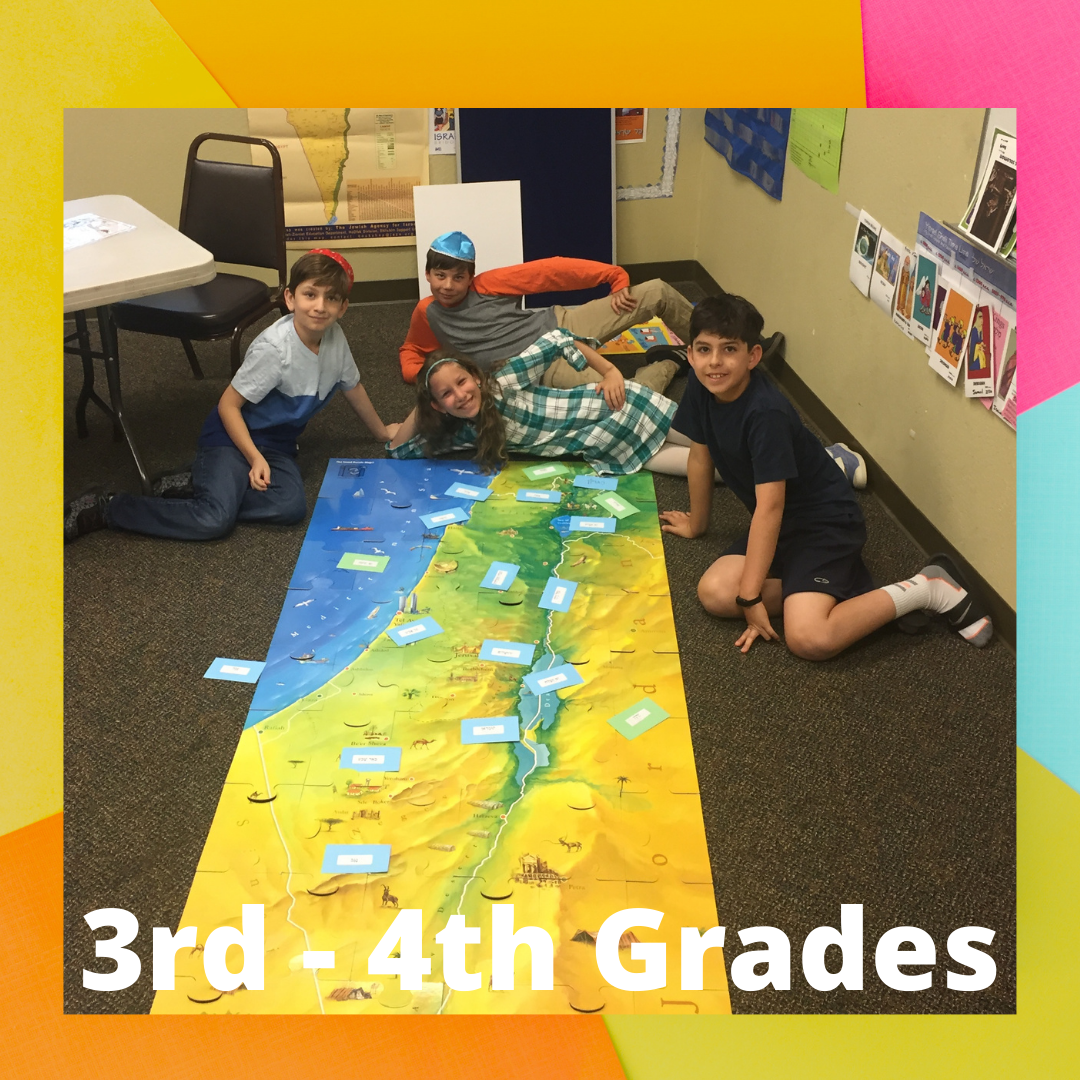
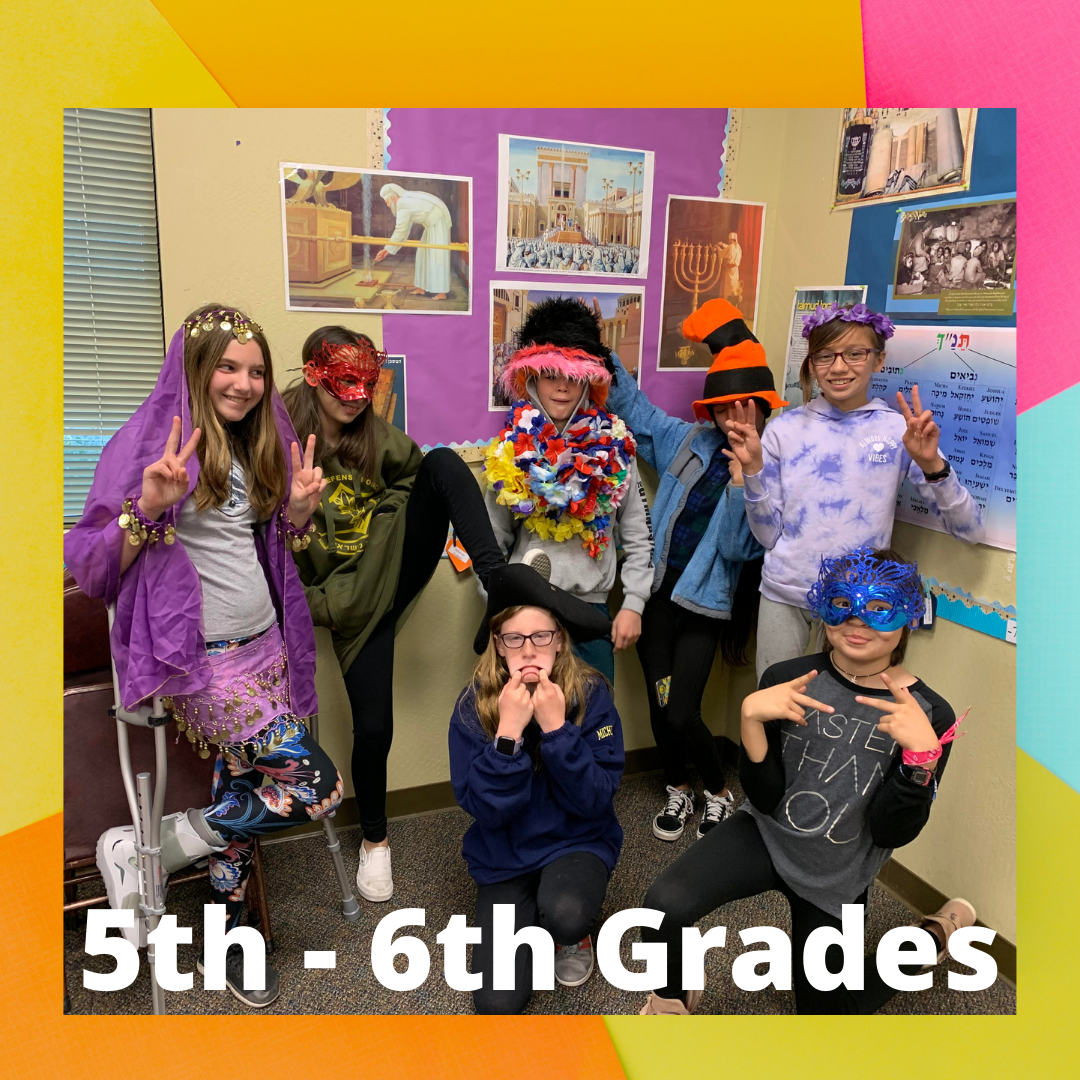
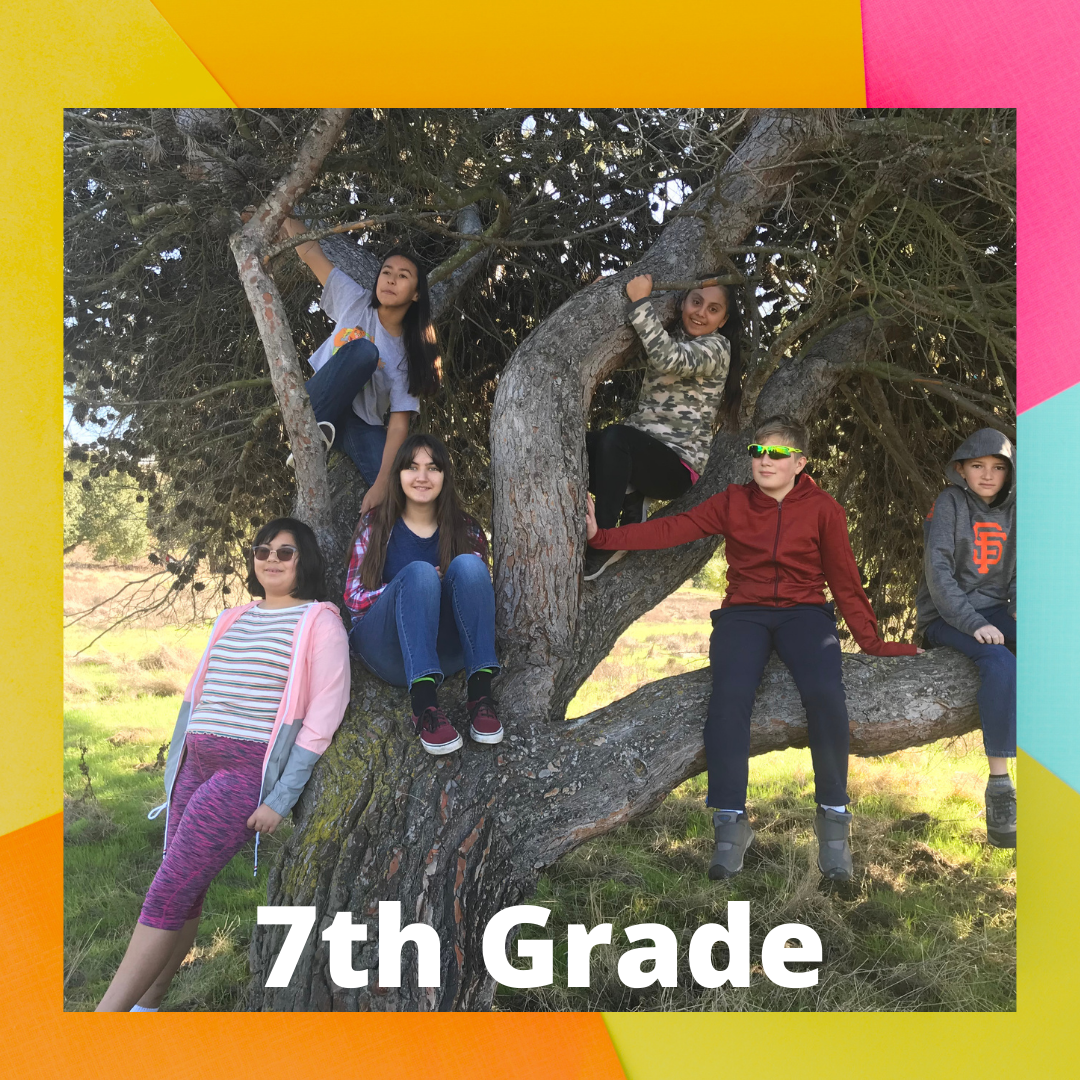
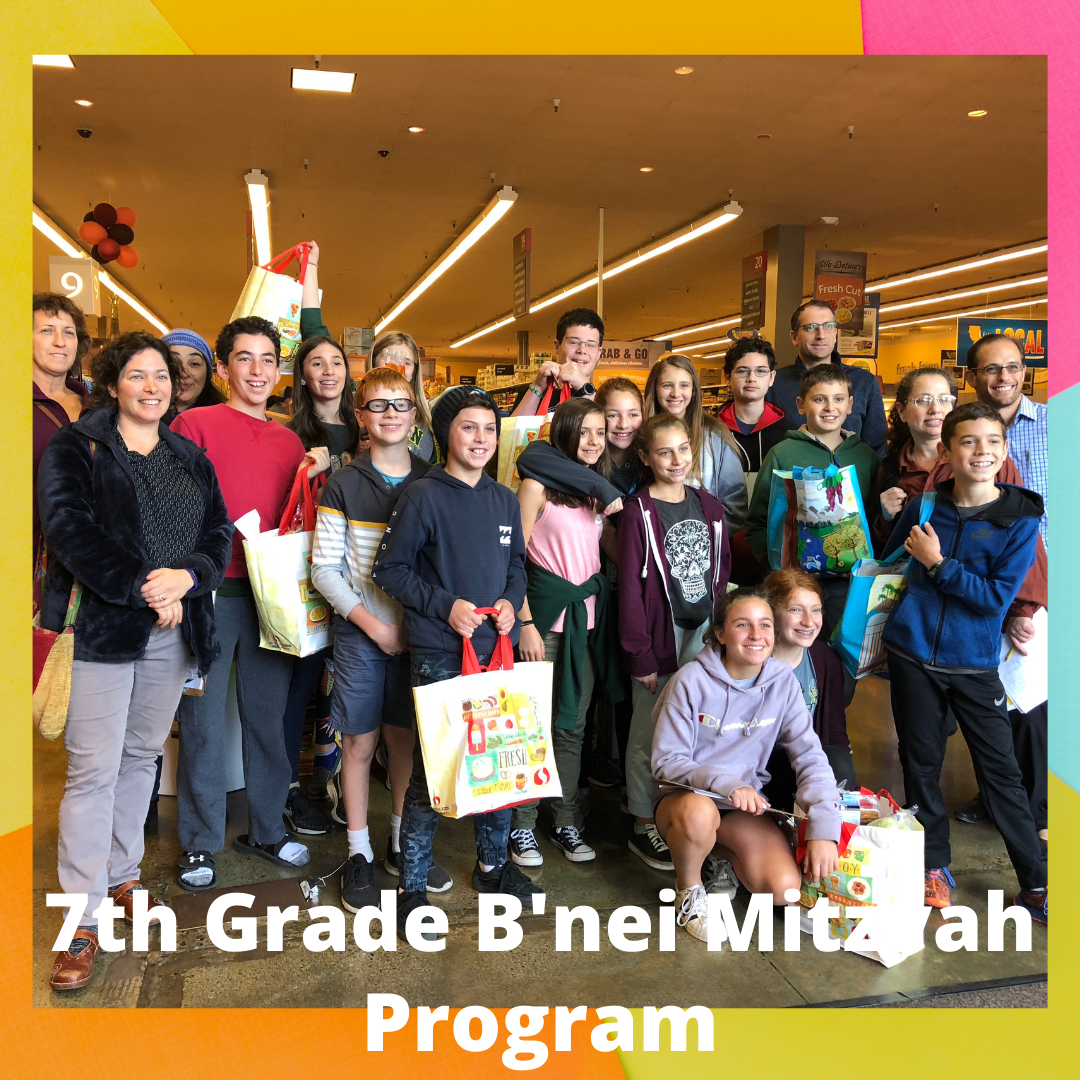
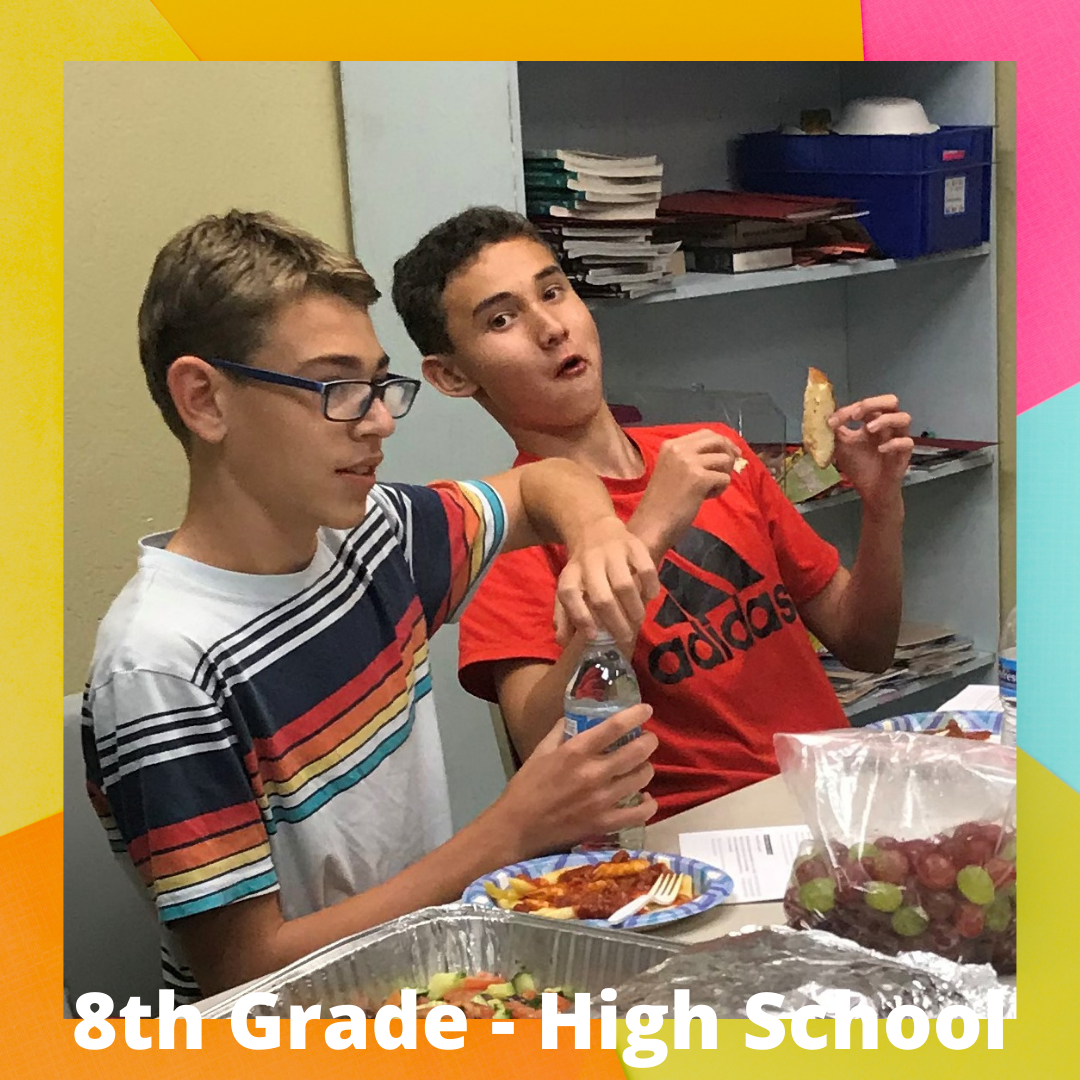
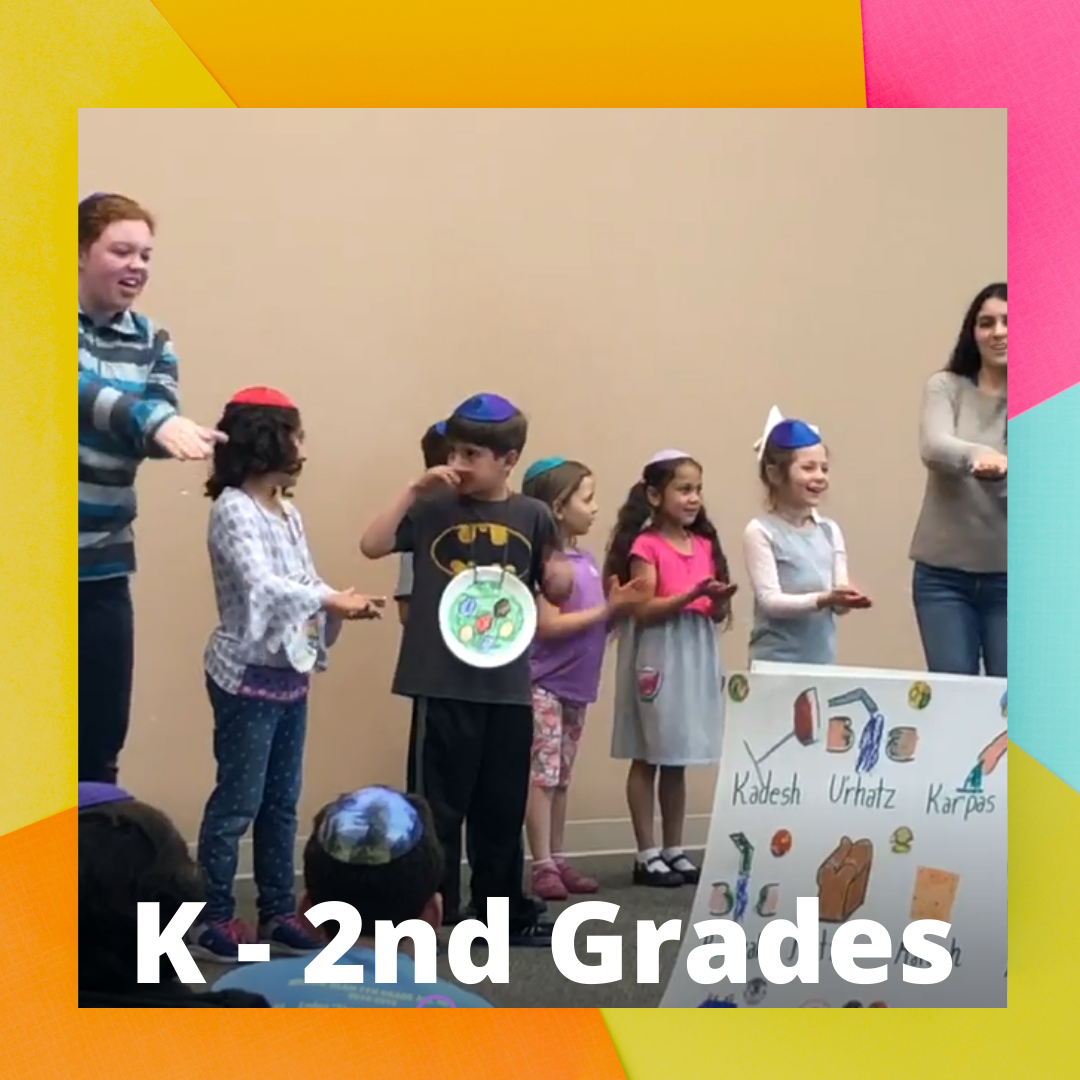
Our religious school program starts with Kindergarten and goes through 7th grade. After religious school, we offer high school programming for students in 8th grade and up. Our creative teachers instruct students with multiple modalities, from text to movement to film to discussions, enabling students to experience the learning first hand.
Click on an image below and hover over the image to get a glance at what is covered in each age group.
Membership is required for enrollment in the Sinai Religious School. Families who have not yet joined Congregation Sinai may send their child(ren) in grades K - 3 to the Religious School for one year, after which they are asked to become members of the community.
High school programs do not have a membership requirement.
Sinai Religious School Featured Events
Thank you for helping to support The MLK, Jr. Chesed Day at Sinai Religious School. Your donation will go to purchasing items for the homeless survival kits and school supplies for children in need. Click below to make a contribution.
Sinai’s 7th-Grade B’nei Mitzvah Class of 5786
Interviews Senior Members of Sinai
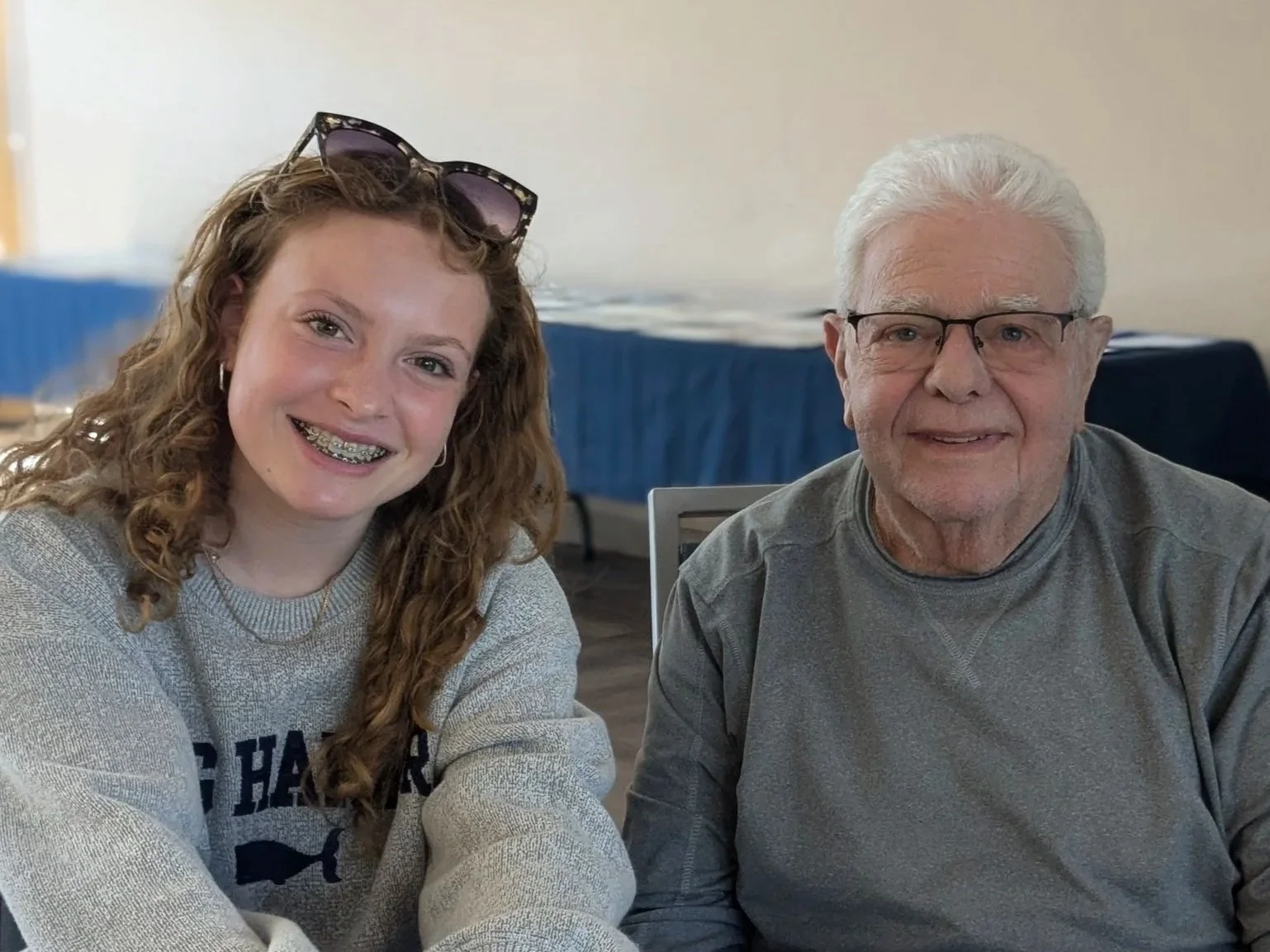
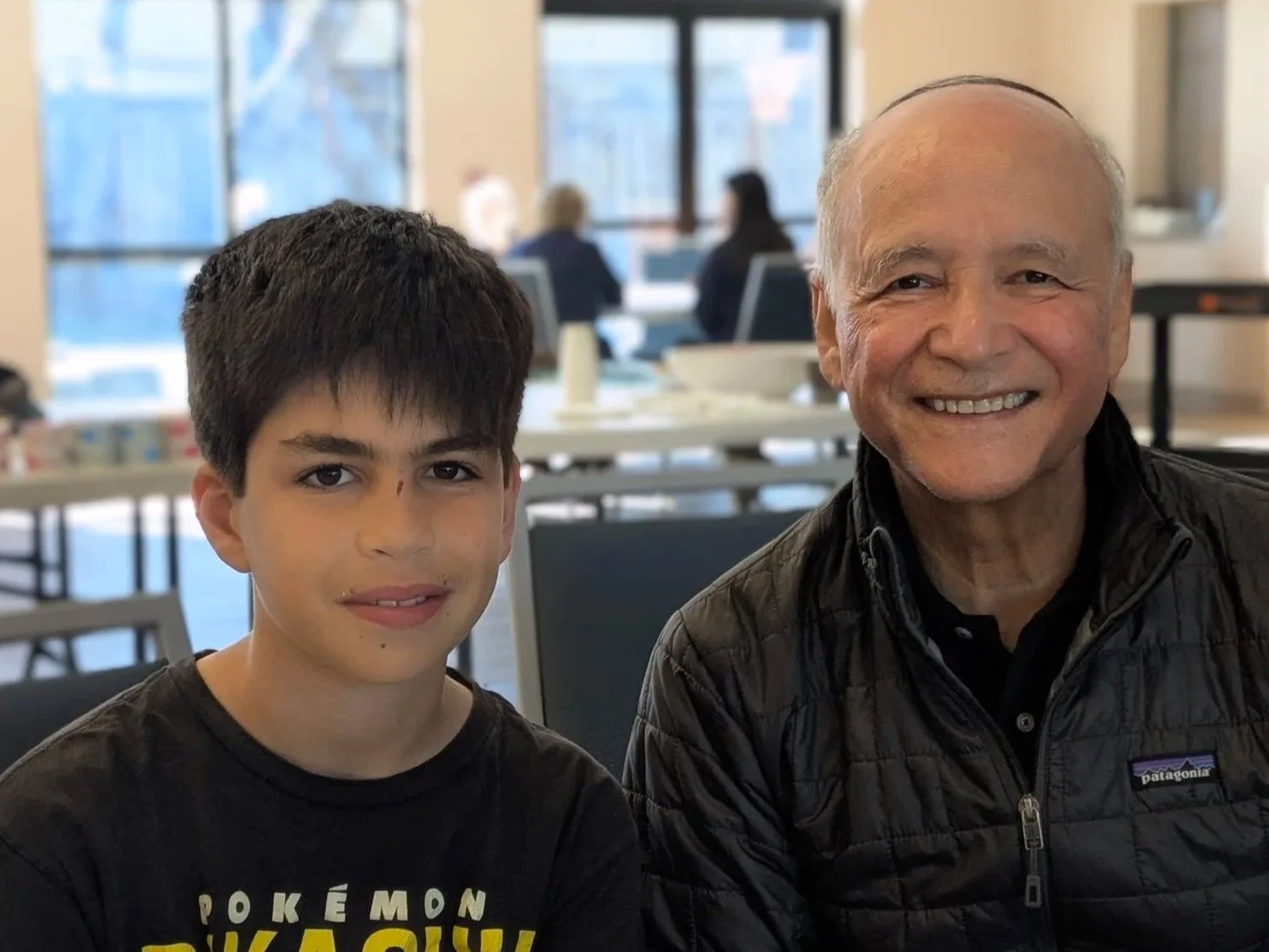
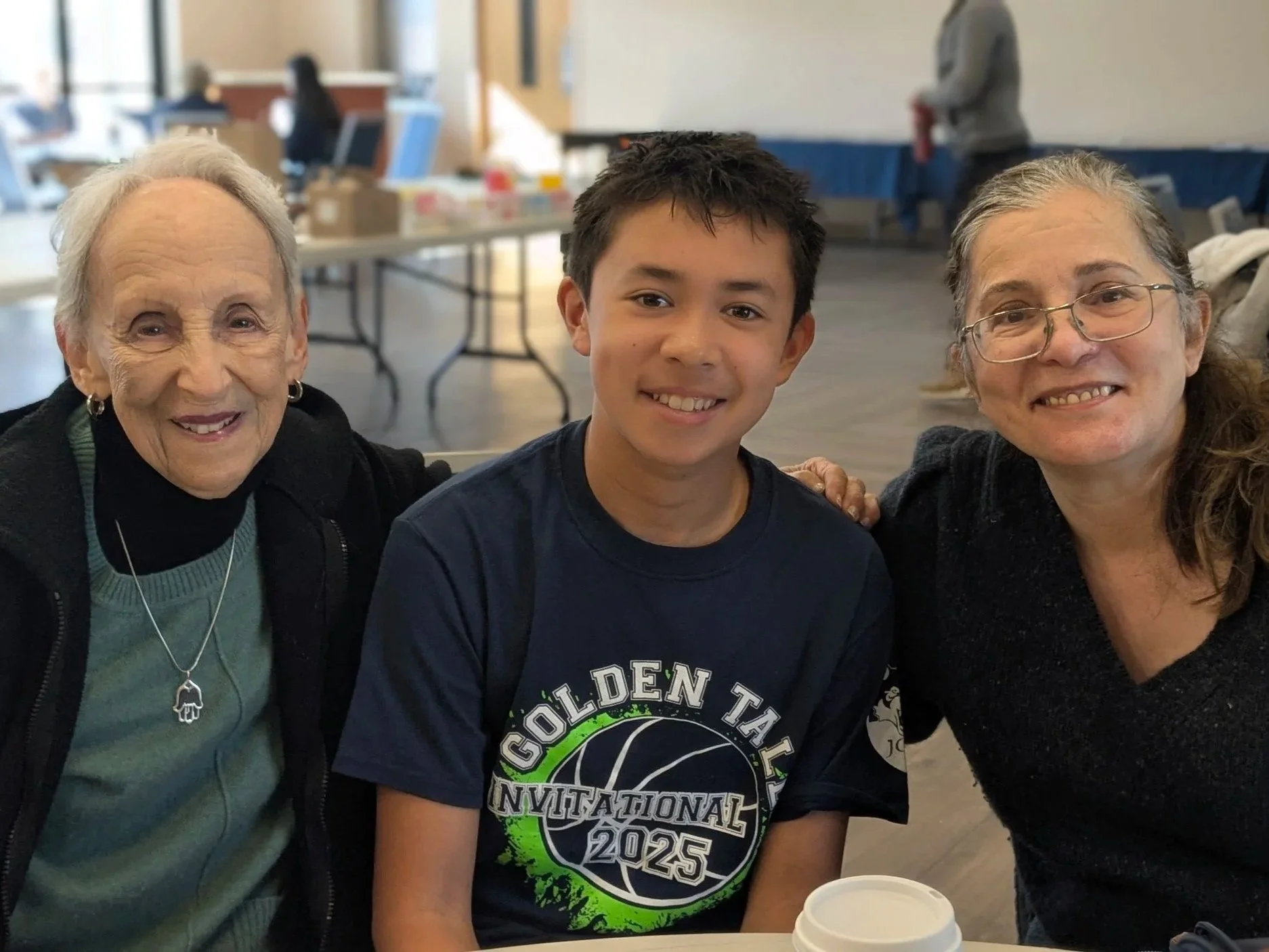
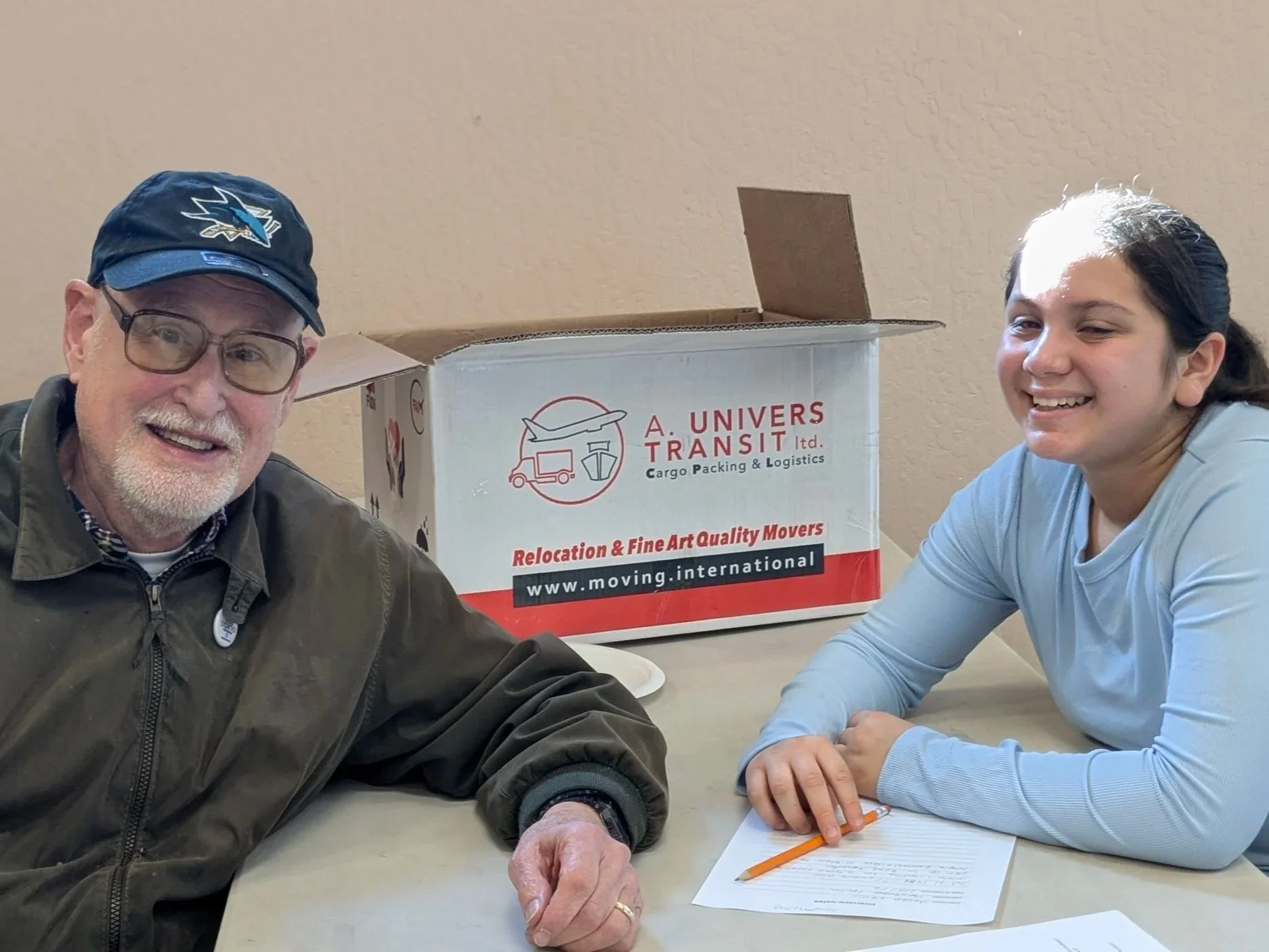
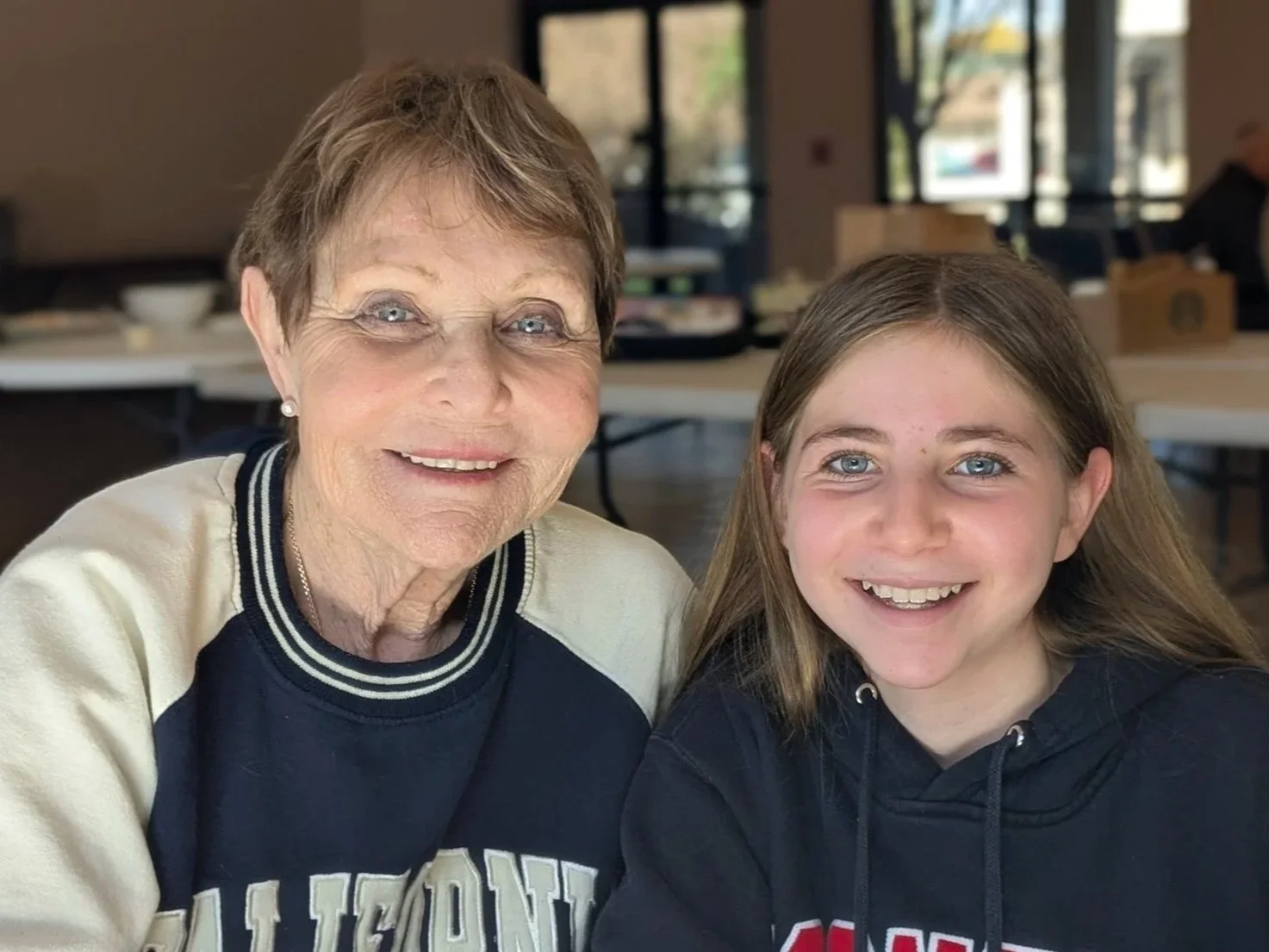
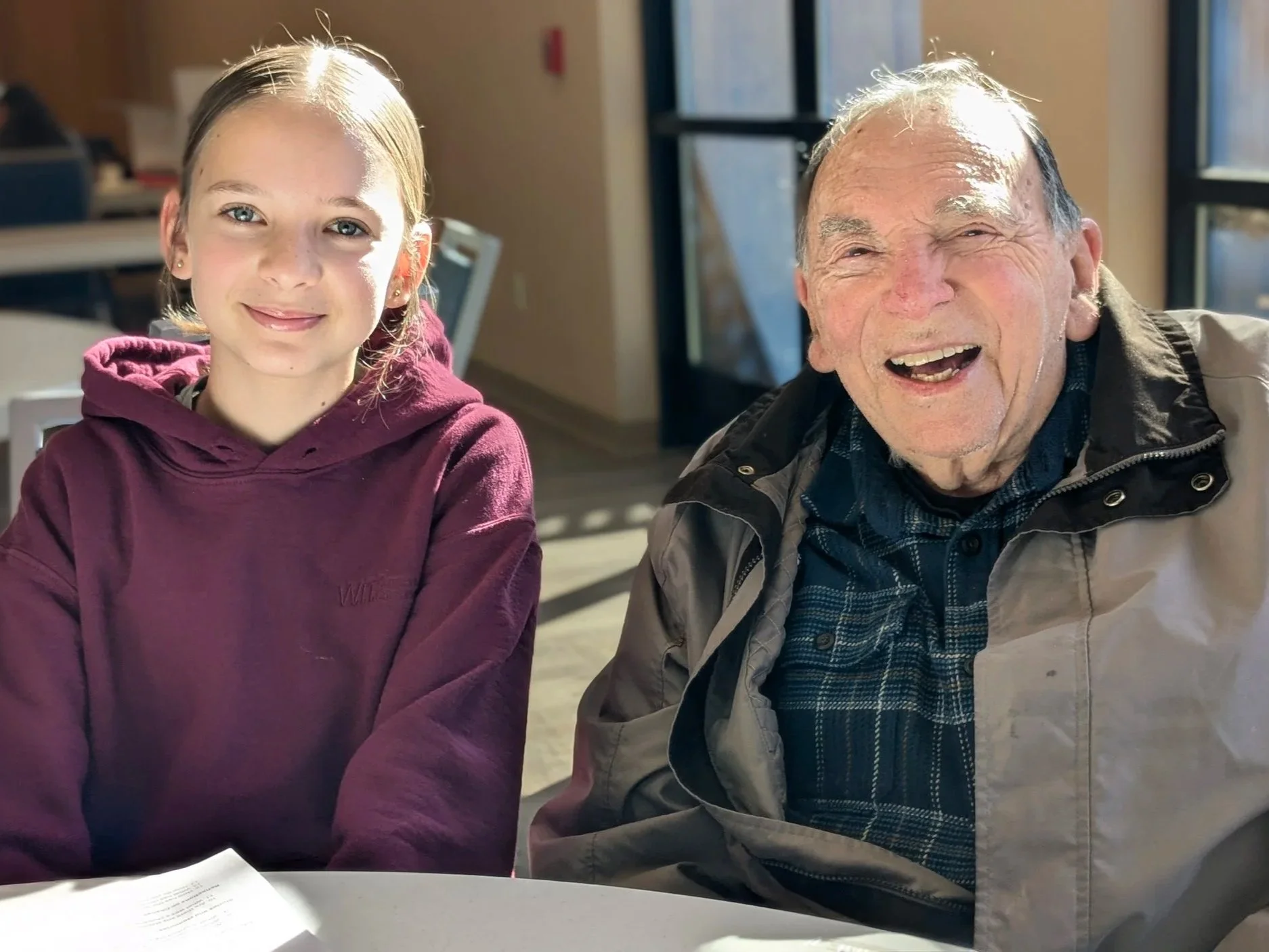
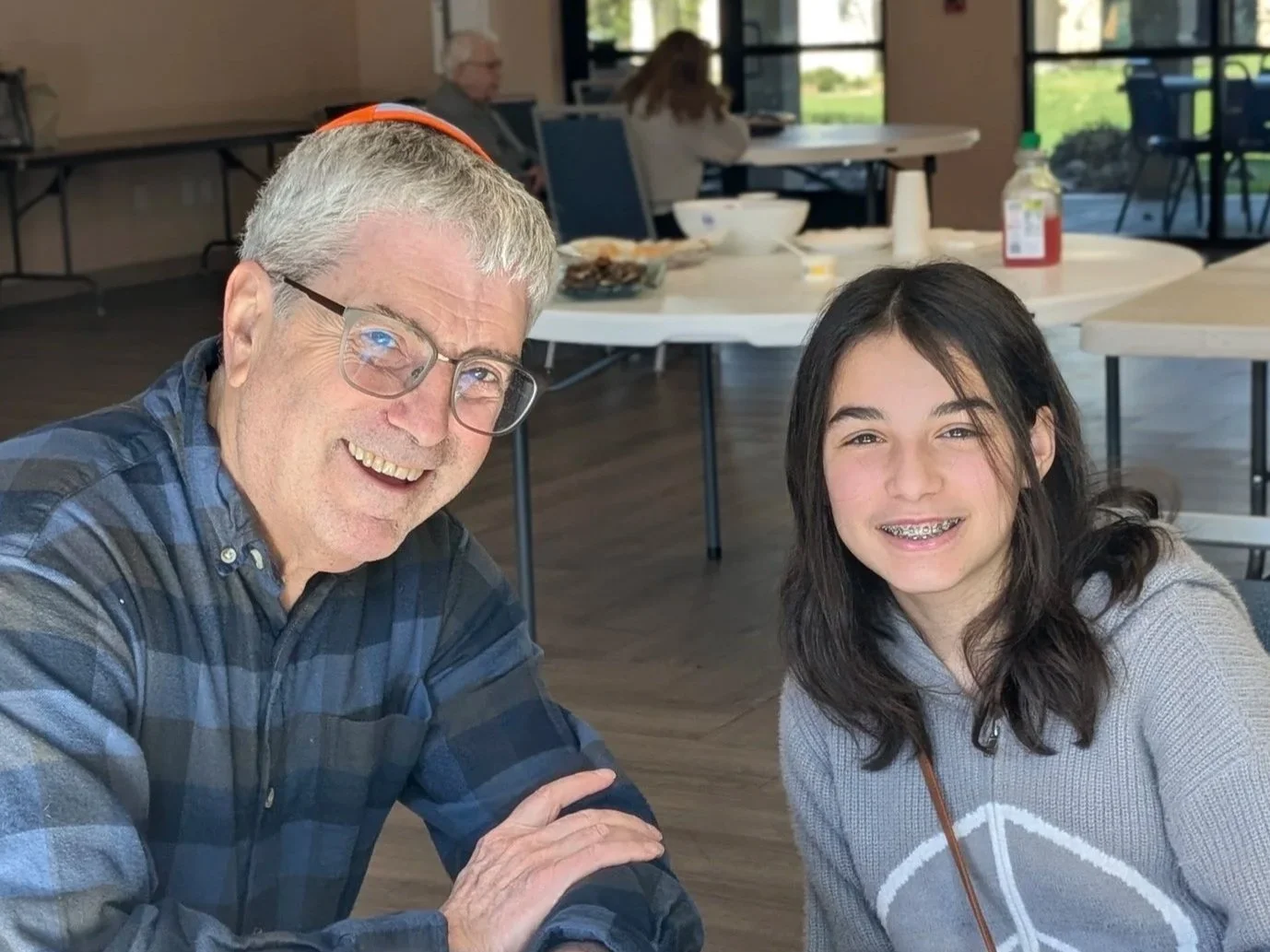
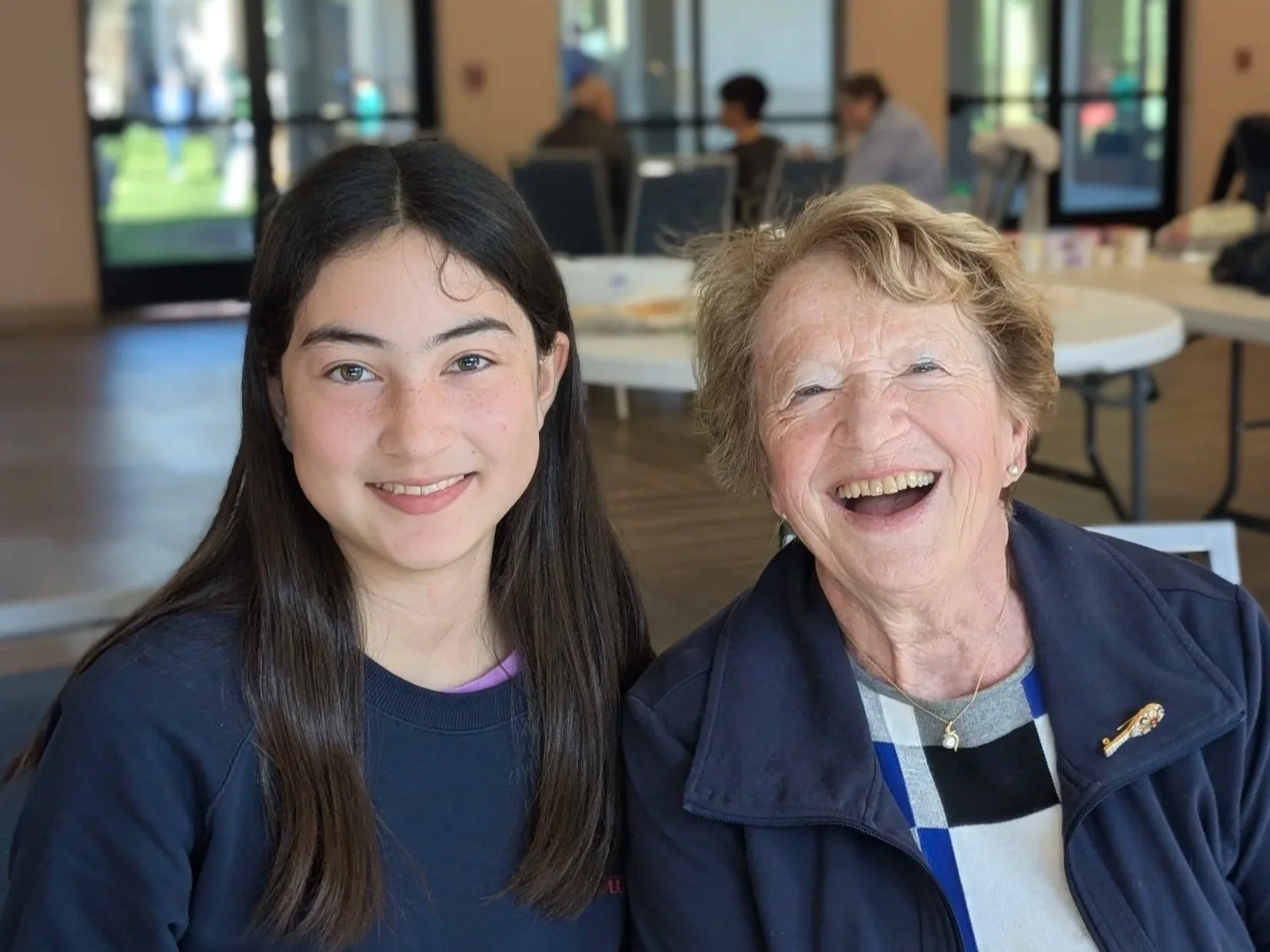
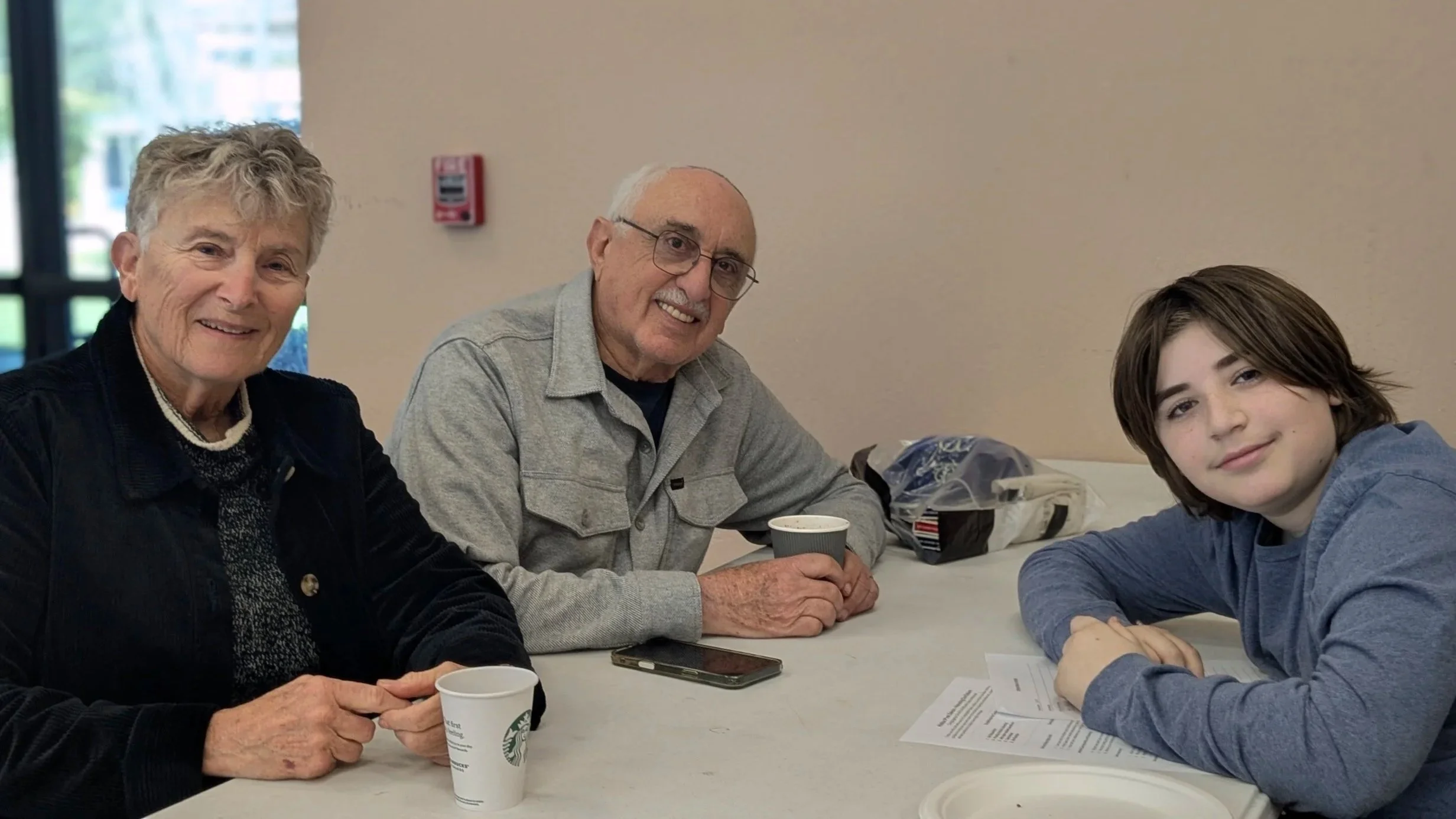
On February 8, 2026, as part of their learning about what it means to belong to the Jewish community, the B’nei Mitzvah class of 5786 interviewed some of Congregation Sinai’s senior members. They are excited to introduce them to you.
Miriam Leiseroff was born after the war in Berlin, Germany. She went to school in Germany and would walk to school. Her father was "half" Jewish and she had no Jewish education before she converted. She loves passover, potatoes, fruit, and bagels. Her favorite colors are blue and pink.
Abe Seiden was born in a displaced persons camp in Germany, but shortly moved to Brooklyn, New York, when he was 1 year old. He enjoyed collecting stamps and playing football. Abe often played football with his brother, who was 10 years older than him. His brother always kicked the ball. Another game in his time was stickball, which is similar to baseball. Abe liked school and was in a special program in junior high called SP, and learned 3 years in 2. Abe didn’t think the accelerated class was hard, but it isolated the kids from the rest of the school. This junior high school in California was very crowded, and eventually the principal committed suicide.
In recent years, he won the ICFA (International Committee for Future Acceleration) for a physics detector. This LGAD was able to measure time of arrival. Despite that this won’t have much impact on everyday life, the LGAD is a very important breakthrough in physics. Separately, Abe recalls a drastic difference from his orthodox shul in Brooklyn. He recalls that at the beginning there were disputes on how observant it should be. Abe’s favorite holiday is Hanukkah because of the latkes which he eats with sour cream and/or sugar. Abe’s advice for us is to enjoy life and youth.
Bob was born in Everett, Massachusetts in 1945. He went to Temple Emanuel, which was a conservative shul and was bar mitvahed there. He had two siblings, a sister and a brother who were both b’nei mitvahed at congregation Sinai in San Jose. All of his siblings including himself got married there. Along with him and his wife, he had two boys, Ethan who was the youngest, and Dan who was the oldest. His kids grew up going to congregation Sinai, along with going to hebrew school and attending services. Fun fact, when BoB was a kid, there were no elevators along with no electronics except for a tv. Instead of being on a screen, he would go outside and ride bikes with his friends.
Bob's grandparents were in a program in Europe. The whole program saved up a lot of money so that only one person could travel to America. Bob's grandpa was the person that went to America and once he got there, he would carry ice to people on his back up many flights of stairs. While his grandpa was in America, he paid someone to get the rest of his family back. After three people, he was finally able to get back his family. Once his family was there, they started a rag company that would take old clothes and break them up and then send them to Italy that made them nice, and then they would send them to third world contries. His grandpa passed his business down to Bob who then passed it down to his youngest son, Ethan, who moved it to Kansas and now runs it himself.
Sam was born in Iran. He has 8 siblings, mostly girls. There was not a big Jewish community so he had to go to a synagogue out of town. As a kid he went to a public school. He has a lot of family in Israel, and when his brother was 12, he went to Israel. In 1976, he moved to Michigan, and went to college there. He got a PHD there, and had his 1st job working for I.B.M. in 1982. He has 3 kids, and a granddaughter who is just two months old.
His piece of advice is: "Study, learn, go to college." He likes to go hiking and recently saw a bald eagle there. Since he was little, global warming has gotten worse. Politics have significantly changed, and people are still attached to Judaism. He likes watching basketball and listening to Michael Jackson.
Soraya is a very interesting person. She grew up in Tehran, Iran, to very orthodox parents. When she was young, there were many Jewish people where she was, but as she grew older, the number started to go down gradually as more Muslim people came, and violence rose. When the civil war came, even less Jews were left. During this time, it was very hard to make friends because of the worry of violence. One time when she was walking alone to the store, a police officer took her and brought her home, because it was very dangerous. She went to college and worked as a pharmacist, but during this time, it was getting more and more violent. It got to the point where she would be treated as “other,” and she wouldn’t be allowed to have a husband. In June 1989, she decided to leave Iran with the help of the Sochnut, an Israeli agency. She walked to the border of Iran, went to Afghanistan, Pakistan, and back, but eventually flew to Israel. She said that Judaism is a big part of who she is, and makes her who she is. She met her husband in Israel, and has kids.
Steven Levin was born on Oct. 21, 1948, and grew up in Reno Nevada. He went to Temple Emanuel, and went to Hebrew school 2 times a week. His favorite holiday is Passover because it reminds him about being free. He likes to spent time with his 3 kids and 4 grandkids. Steven grew up in a small Jewish community that was very pro zionist.
Steven likes math. His high school had a computer, which was unusual at the time. He went to Berkely and majored in math and computer science. After graduate school, he got a job in the computer field, and worked for 6 companies.
Steven thinks that academic requirements are not as strict. Some advice he has is to be proud of being Jewish and to study hard and to be involved with your community because it is important in society now.
Kira an extremely sweet, caring, and kind person. She was born in New York on a small farm. Her neighbors had horses that they owned and took care of. However they were too old to ride the horses. So Kira got to go ride the horses, and she loved it. She has a half brother that is 11 years older than her. After school her & her friends would play baseball & pick fruit. She didn't have any Jewish education until she was 13-14. She didn't have a bat mitzvah because it was uncommon for a girl to. When she moved she went to church with her dad and temple with her mom. She didn't connect at all with the church. However when she went to the temple with her mom she connected and it felt right. Now that she belongs to Sinai, her favorite part is the community. She loves the people here and how sweet and kind everyone is. She loves to help people and animals. Her dad was an orphan as a child and a self-taught person. As he grew up, he became a merchant marine. He helped her become the person she is today. He inspired her to always help people and work hard even when challenged. Kira helps out with the grocery shopping for the synagogue’s lunches and dinners. One thing she noticed when she was shopping was that there is not a lot of kosher brands. Not only that, but Safeway only had traditional holiday foods after the holiday. After thinking that through, I wonder if they trulu didn't know or if they were just too lazy to check. One wish Kira has for the world is for people to listen to each other.
Today I interviewed an extremely kind man named Hal. Hal was born and raised in New York. He went to a school where he learned Yiddish and Jewish History. Hal had his Bar Mitzvah in a small shul with a few others to celebrate with him. Later, he went out for dinner with his friends and family. Although he did have a Bar Mitzvah, Hal said that he learned most of his Jewish education in his adult years. When he was a kid, there was no television and no computers, so he would listen to the radio and make games with his friends. When I asked him how Judaism influenced his life, I realized that we both have a similar view on the importance of Judaism; that it's not only about the prayers and readings, but also about the work on yourself to help others. One thing about Hal that I thought was very impressive was that he earned two degrees, one in medicine, and after becoming a doctor, he earned his degree in history. He told me a story of when he told his parents that he didn't know what path to choose when he grew up. His father sternly said, "You'll be a doctor, a Jewish doctor."
Then, when I asked Hal one thing in his life that he is proud of, I got an answer I didn't expect. He said, "My wife, my marriage." He then explained that Love is the feeling of being safe, and feeling like there isn't anything that can hurt you. After talking to Hal, I learned that you should always enjoy life, and try to live a good one. I'm very glad I got to talk to him, today.
Evan Ohriner is a 74-year-old member of Sinai. Some of his hobbies include Jewish book club with the rabbi on Thursday, cosmology club, Zumba at the JCC, and working out at the gym. He grew up in Tennessee with his mother and father. His favorite Jewish holiday is Sukkot. He went to MIT for college and did science stuff, such as nuclear power supplies for astronauts and space rover fusion reactors.
"Be strong and keep moving forward." These positive and uplifting words came from the mouth of Elizabeth Seiden. Elizabeth moved to the US from Transylvania, Romania, where she was born. Her parents were Holocaust survivors who met at a concentration camp.
Elizabeth moved to the US when she was 14 years old. She came through Viena, Austria. She was supposed to go to Israel, but her uncle who lived there told her father they should go live in America. Her other uncle was then able to sponsor them.
Elizabeth was once able to speak 6 languages - Hungarian, Romanian, Russian, French, German, and English. She has lived in Romania, Switzerland, and America.
Before leaving Romania, Elizabeth became blood sisters with her best friend. They did this by cutting their fingers, and exchanging blood.
When asked for advice when faced with difficult times, Elizabeth said to "try to be positive". She is most proud of her family, and enjoys listening to music whenever she can. Overall, Elizabeth is an amazing and kind person. Full of stories to be shared.
Loraine Hoff was born in 1941 in Brooklyn. She grew up in a mostly Jewish society but met her soon to be husband, Sy, in 1967 at a hotel in San Francisco, where she worked in the office. Sy was working as a waiter. After meeting, they moved to California in 1968. Sy was born in 1941 in Poland but moved to Uzbekistan after one month. Four years later, he moved to Germany and lived in a DP camp, but soon after moved to Brooklyn. After getting married in 1968, Loraine became a teacher, and Sy became an engineer.
Sinai’s 7th-Grade B’nei Mitzvah Class of 5785
Interviews Senior Members of Sinai
On January 26, 2025, as part of their learning about what it means to belong to the Jewish community, the B’nei Mitzvah class of 5785 interviewed some of Congregation Sinai’s senior members. They are excited to introduce them to you.
“I interviewed Martin Snit0w, one of the Sinai elders. “I was born in Brooklyn, and grew up in Queens.” He recalled, “I moved to Queens in a year and a half... all my school was in Queens, including college.” He took Economics in college, getting a bachelors degree. Once he finished college, “I went to Yale Law School, graduating with a JD. Five years later, I met my wife while bumping into her and asking for directions. We hit it off after a course of letters and married 3 days after her graduation.” In 1982, I had a son and later in 1984, I had a daughter.”
When I asked one thing he was proud of in his life, he answered back, “I had a nice life and didn’t hurt anybody.” A holiday he really enjoys would be Simchat Torah and Purim. Both are full of energy and life. A valuable life lesson for him would be, “Having children. Having children isn’t just a life lesson, it’s a life time.” For something he wishes he did more, he simply replied, “I wish I smiled more.”
Havdalah was a special moment for him, “We would all turn on the music & run around the couch. It wasn’t a formal celebration; it was our celebration.”
Abe Seiden was born in Berlin and moved to Brooklyn when he was 2 years old, then moved again when he was 14 to New York. In junior high, he took Spanish class and went to high school in Manhattan. He was a valedictorian at Columbia University. His favorite holiday was Passover in New York with a few other families, including his own.
He enjoyed his mother’s cooking, and his favorite memory in Sinai was watching his father pray. When I asked him what information he wished he had when he was my age, he said to be careful in New York.
I interviewed Kyra and Hal. Kyra and Hal didn’t grow up in a Jewish household. Kyra and Hal came into the Jewish life when they were older.
When I asked Kyra about how being Jewish affected her, she said that she had seen the dangers of being Jewish and wanted to give back to the Jewish community and keep them going. Hal said that he taught history, and doing that, he taught religion. He realized that they didn’t teach Judaism, so he started researching Judaism and wanted to teach it. He said that the Jewish people are wise and wanted to teach it to other people.
Kyra and Hal decided to join Sinai because of Rabbi Josh. They attended his classes and wanted to support his community. When I asked them about life lessons they would have wanted at my age, they said to “engage with others” and that “what ever made all of this, it’s wonderful,” and to “pave the way from others.” Hal said, “understand things... make the world better.”
I asked about what they thought about memories and traditions. Hal told me that he thought every day was important. I asked them about how things are different now than they were. Kyra told me how people aren’t kind to people, and that she has a sticker on her car that says, "G-d should have stopped with dogs." Hal told me that it was frightful how anti-Jewish people are acting and that Judaism is being lost in some places.
He said to never stop learning, that it is never too late and you are never too old to learn.
Bob is a passionate Jew who joined Sinai in 1959 and transferred between several synagogues before settling at Sinai. Bob grew up in Massachusetts and moved to California when he was in his early teens. He grew to be very passionate about his Jewish religion. He loves the Sinai community, and likes the kids. Bob likes the feeling when he prays and tries to often come on Saturdays and Sundays. He likes the Jewish education that Sinai gives to All the kids. He told me to not rush to grow up.
My interview with Lorraine went very well. I learned a lot about her life. She liked to ride her bike and play handball. She was born 1944. She did not get a bat mitzvah. She had her 60th wedding anniversary at Sinai. She also grew up in Brooklyn. I learned a lot today.
My name is Noah Katz, and today, I interviewed Elizabeth, who has been a member of the Sinai community for about 48 years. She was born in communist Romania and was named after her grandmother in a small Jewish town with a large population of Holocaust survivors. Both of Elizabeth's parents were Holocaust survivors who met in the camps. Although she went to religious school in Romania, Elizabeth did not have a bat mitzvah and does not remember many bnei mitzvah in her hometown. Elizabeth did not have many family traditions relating to the Jewish holidays. On a similar note, she did not remember what she did for holidays, including Rosh Hashana. Her mother did not talk much to her or her brother about her experience in the Holocaust.
She immigrated to the U.S. at 14 with her family from Romania. Shortly after arriving, her father died of leukemia at the young age of 40. She later became a teacher, taught middle school in many different places, and taught Yavneh's fifth-grade class. When her eldest daughter was born, Elizabeth and her husband joined Congregation Sinai and have been here ever since.
One of the most breathtaking things she said was that the rare times there was antisemitism in her small village, she felt, "Being called a Dirty Jew once is enough for a lifetime." She also said that there are many problems in the world, and the future is very uncertain. When I asked Elizabeth about her greatest achievements were her teaching career and children. Elizabeth enjoys walking, playing the piano, which she wishes she had more time to practice, and reading.
My name is Asher Lewis, and today, I interviewed 76-year-old Sinai senior Steve Levin. He grew up in a place smaller than San Jose, where the children could freely walk around. He had an enjoyable childhood, with lots of Jewish friends and summer vacations to Yosemite. His favorite family tradition was Passover seders with around 2 dozen people. To this day, Passover remains his favorite holiday. He also grew up with medical issues in a world with no Internet and more direct communication (unlike most teens today). Since then, the world has changed tremendously. With more access to planes, he travels a lot more. He's gone to 46 states, most of Western Europe, Israel, Canada, and even lived in London for 5 years! He joined Congregation Sinai 3 years ago. Seeing as he joined during COVID and that Sinai was still open, coming for the 1st time was his most meaningful experience here at Sinai. He hopes that our congregation can attract more members, particularly youth and families, in the future.
Today, I interviewed Maureen and Sy. They were both proud of their children and grandchildren. Some Life lessons they said were to listen more than speak and to be aware of your Judaism. Both of their favorite traditions were Passover. Jewish traditions have not changed but the people have. They both said that the world has changed and that technology changed tremendously. My name is Ezra Fronen. They both went to college. Sy went to CCNY and Maureen went to UC Berkeley.
My name is Eva, and I interviewed Miriam Leiseroff about her life. Miriam grew up in Berlin. In 1972, she moved to California. While in Berlin, she experienced the building & the destruction of the Berlin Wall, which was a big event in her life. While also in Berlin, she liked visiting the Grunewald Forest to have picnics & visit the cabin that her grandfather built. She converted to Judaism in 1981 at Sinai & has been here ever since. Her favorite Sinai memory was her Bat Mitzvah.
Her favorite thing about Judaism is the freedom & ability to question things. Miriam said that Sinai has acted as her anchor over the years & loves the community because of how caring and supportive everyone is. She hopes that Sinai will stay the same loving community for years to come.
Her favorite holiday is Passover. Her favorite holiday memory was her first Seder.
When I asked her about the most challenging thing that has happened in her life, she said it was leaving everything, including her family, to move from Berlin to California.